How I Nailed My Car Insurance Game Without Losing My Mind
Let’s be real—navigating car insurance feels like walking through a maze blindfolded. I’ve been overcharged, under-covered, and totally confused more than once. But after years of trial and error, I cracked the code on balancing protection and cost. It’s not about buying the cheapest policy—it’s about smart risk control. I’ve learned that a few hundred dollars saved on premiums can vanish in minutes when an accident exposes gaps in coverage. The real win isn’t a low monthly bill; it’s peace of mind knowing you won’t face financial chaos when the unexpected hits. Here’s how I turned confusion into confidence, and how you can too—without the stress or surprise bills.
The Moment I Realized I Was Getting Played
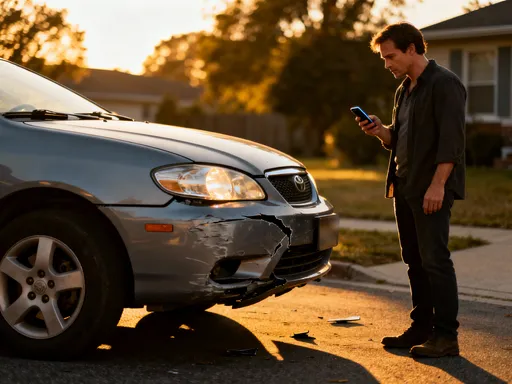
It started with a fender bender on a rainy Tuesday. Nothing serious—just a tap at a stoplight. But what followed was anything but minor. My car needed repairs, and I assumed my insurance would cover it. After all, I’d been paying for “full coverage” for years. But when the estimate came in, I discovered a troubling gap: my collision coverage had a high deductible, and I wasn’t covered for rental car expenses during repairs. Suddenly, a $1,200 repair meant a $500 out-of-pocket cost plus two weeks without a vehicle—costing me even more in rideshares and lost time. That’s when it hit me: I wasn’t just underinsured. I’d been misled by my own assumptions.
This incident wasn’t just about money—it was about risk. I had treated car insurance like a box to check, not a financial strategy. I’d chosen my policy quickly, based on price alone, without reading the details. I assumed “full coverage” meant comprehensive protection, but in reality, it’s just a marketing term. True protection requires understanding what you’re actually paying for. The emotional relief of a low monthly premium had blinded me to the long-term financial risk. And I wasn’t alone. Millions of drivers make the same mistake, lured by attractive rates only to discover too late that their policy doesn’t cover what matters most.
The lesson? Ignorance isn’t a savings strategy—it’s a financial liability. Every decision you make about insurance affects your exposure to risk. Rushing into a policy without understanding its limits is like building a house on sand. When the storm hits, it won’t hold. My wake-up call taught me that car insurance isn’t just a legal formality. It’s a critical part of personal financial planning. It protects not just your car, but your budget, your time, and your peace of mind. From that moment on, I committed to understanding my policy inside and out—because real savings don’t come from low premiums. They come from avoiding costly surprises.
What Car Insurance Really Protects (And What It Doesn’t)
To make smart choices, you need to know what each part of your policy actually does. Car insurance isn’t a single blanket of protection—it’s a collection of coverage types, each designed for specific risks. The most common components are liability, collision, comprehensive, and uninsured motorist coverage. Each serves a distinct purpose, and understanding the difference is key to building a policy that truly protects you. Too many people assume their insurance “covers everything,” only to learn otherwise when they file a claim. Clarity here isn’t just helpful—it’s essential for financial safety.
Liability coverage is required in almost every state and pays for damage or injuries you cause to others. It doesn’t cover your own car or medical bills, but it protects your assets if you’re at fault in an accident. For example, if you rear-end another driver and they need $15,000 in repairs, liability covers that—up to your policy limit. Without it, you could be personally responsible for the cost. Collision coverage pays to repair or replace your car after an accident, regardless of fault. But it comes with a deductible—the amount you pay out of pocket before insurance kicks in. Comprehensive coverage handles non-collision events like theft, fire, vandalism, or weather damage. If a tree falls on your car during a storm, comprehensive is what helps you recover.
Uninsured motorist coverage is often overlooked but just as important. It protects you if you’re hit by a driver who has no insurance or not enough to cover your damages. In some states, nearly 15% of drivers are uninsured. That’s a real risk, especially in urban areas. Yet many people skip this coverage to save a few dollars a month. What they don’t realize is that a single accident with an uninsured driver could cost thousands. None of these coverages are optional just because they’re not legally required. They’re tools for managing risk. And none of them cover everything. For instance, routine maintenance, mechanical failures, or personal items stolen from your car are typically excluded. Knowing these boundaries helps you avoid false assumptions and make informed choices.
The Hidden Traps in Policy Fine Print
Insurance policies are full of fine print—and that’s where many people get caught. What sounds like broad protection can come with strict conditions. One of the biggest surprises I encountered was the concept of diminished value. After my car was repaired, I learned that its market value had dropped—even though it looked as good as new. My policy didn’t cover that loss. In some states, you can file a diminished value claim, but only if you know to ask for it and have the right endorsement. Without it, that financial hit comes out of your pocket. It’s a perfect example of how “full coverage” doesn’t always mean full recovery.
Another trap is rental car coverage. I assumed my policy included a rental while my car was in the shop. It didn’t—not fully. My plan only covered rentals for a limited number of days and only up to a certain daily rate. When repairs took longer than expected, I had to pay extra. Some policies exclude rentals entirely unless you add a specific endorsement. The same goes for lending your car. Many people think their insurance covers anyone who drives their vehicle. That’s mostly true for liability, but not always for collision or comprehensive. If your teenage child borrows your car and gets into an accident, your rates could go up, and your coverage might not apply the same way.
Then there are exclusions for certain types of use. If you drive for a rideshare service like Uber or Lyft, your personal policy likely won’t cover you during active trips. You need a rideshare endorsement or a commercial policy. Similarly, using your car for food delivery can void coverage if it’s not disclosed. These gaps aren’t hidden on purpose—they’re spelled out in the policy, but most people never read them. The solution isn’t suspicion—it’s diligence. Take the time to review your policy annually. Ask your agent to explain any terms you don’t understand. Request a full breakdown of what’s included and what’s not. Treat your insurance like a contract, not a brochure. Because when disaster strikes, the fine print is what matters.
How to Match Coverage to Your Real-Life Risk
One size does not fit all when it comes to car insurance. Your needs depend on your car, your driving habits, your location, and your financial situation. A young driver in a high-theft city with a new car has different risks than a retiree in a rural area with a ten-year-old sedan. Yet many people buy the same standard package without adjusting for their actual exposure. That’s how you end up either overpaying for unnecessary coverage or underinsured when you need it most. The smart approach is to assess your personal risk profile and tailor your policy accordingly.
Start with your car’s value. If you own a vehicle worth $8,000 and your collision deductible is $1,000, ask yourself: is paying for collision coverage worth it? In many cases, the annual premium exceeds the potential benefit. If your car gets totaled, you’ll get the market value minus the deductible. But if that payout is only $6,000 and you’ve paid $800 a year for five years, you’ve already spent $4,000 to protect a $6,000 asset. At some point, the math doesn’t make sense. For older cars, dropping collision and comprehensive can save hundreds a year with minimal risk—especially if you have the cash to replace the car if needed.
Next, consider where you drive. Urban areas tend to have higher rates of accidents, theft, and vandalism. If you park on the street in a busy city, comprehensive coverage is more valuable. But if you live in a quiet suburb with a garage, your risk is lower. Similarly, your driving frequency matters. If you commute 50 miles a day, you’re on the road more and face higher exposure. If you only drive on weekends, your risk is reduced. Adjusting coverage based on these factors helps you balance protection and cost. I moved from Chicago to a small town in Indiana and realized my policy was still priced for city driving. After updating my address and usage, my premium dropped 22%—without cutting essential coverage.
The Art of Balancing Deductibles and Premiums
One of the most powerful tools in controlling car insurance costs is adjusting your deductible. This is the amount you pay out of pocket before your insurance covers the rest. Most policies offer choices—$250, $500, $1,000, or even higher. The higher the deductible, the lower your monthly premium. But this trade-off only works if you can afford to pay that amount when needed. It’s not about choosing the cheapest option—it’s about finding the right balance between ongoing cost and emergency readiness.
I used to carry a $250 deductible because it felt safe. But I was paying $120 a month for collision coverage. When I raised it to $1,000, my premium dropped to $75—a $45 monthly saving. Over a year, that’s $540. Over five years, it’s $2,700. That’s real money. But I didn’t make the switch without thinking. I asked myself: could I pay $1,000 tomorrow if my car was damaged? At the time, I didn’t have that in savings. So I waited. I built a small emergency fund specifically for car repairs. Once I had $1,500 set aside, I increased the deductible. Now, I save money every month, and I’m still protected if an accident happens.
This strategy only works with planning. If you raise your deductible but can’t afford to pay it, you’re just shifting risk to your future self. A high deductible means you’re self-insuring for smaller claims. That’s smart if you’re financially stable, but risky if you’re living paycheck to paycheck. The key is to stress-test your budget. Imagine a $1,000 repair. Could you cover it without going into debt? If not, keep a lower deductible until you can. At the same time, don’t ignore the long-term cost of low deductibles. Paying extra every month for the convenience of a small out-of-pocket cost can cost thousands over time. The goal is to align your deductible with your actual financial capacity—not your fear of worst-case scenarios.
Smart Moves That Actually Lower Your Rate (Without Skimping on Protection)
Saving on car insurance doesn’t require risky moves or loopholes. There are legitimate, proven strategies that lower your premium while keeping your protection intact. One of the most effective is bundling. If you have home or renters insurance, combining it with your auto policy through the same company can save 10% to 25%. It’s a win-win for insurers and customers—lower administrative costs for them, lower prices for you. I bundled my condo and car insurance and saved $320 a year. It took 15 minutes to set up, and I didn’t lose any coverage.
Another smart move is leveraging safety features. Many insurers offer discounts for cars with anti-theft devices, backup cameras, automatic emergency braking, or lane departure warnings. These features reduce the likelihood of accidents and theft, so insurers reward them. When I bought a new car with advanced safety tech, I asked my agent about applicable discounts. I qualified for four separate reductions—totaling 18% off my premium. It paid for part of the car’s safety package within two years. Always ask your insurer what discounts you qualify for. Common ones include safe driver discounts, multi-car discounts, and low-mileage discounts if you drive less than average.
Some people also adjust coverage seasonally. If you store your car during winter months, you might reduce coverage to comprehensive only—dropping collision since the car isn’t being driven. Just make sure to reinstate full coverage before driving again. This isn’t for everyone, but it can make sense for seasonal vehicles. The key is to avoid false savings. Don’t drop liability to save money—that’s illegal and financially dangerous. Don’t lie about your address or usage to get a lower rate. If you’re caught, your policy can be canceled, and claims denied. Real savings come from smart, honest choices—not shortcuts that increase your risk.
Why Risk Control Is the Real Win—Not Just Saving a Few Bucks
Looking back, my journey with car insurance wasn’t just about finding a better deal. It was about shifting my mindset—from seeing insurance as a cost to seeing it as a tool for financial control. The real victory wasn’t the $400 I saved last year. It was knowing that when an accident happened, I wouldn’t be scrambling for cash or fighting with my insurer. I had planned for the risk. I had the right coverage, the right deductible, and the right understanding of what was protected and what wasn’t. That peace of mind is worth more than any discount.
Car insurance is part of a larger financial picture. It’s not isolated from your budget, your savings, or your long-term goals. A well-structured policy prevents small setbacks from becoming major setbacks. It protects your credit, your assets, and your ability to move forward after an accident. And it does so without draining your wallet every month. The goal isn’t to spend as little as possible. It’s to spend wisely—aligning your coverage with your actual needs and financial reality.
I no longer dread policy renewal season. I review my coverage like I review my budget—calmly, carefully, with clear goals. I compare quotes every few years, not because I’m chasing the lowest price, but because I want to ensure I’m still getting fair value. I ask questions. I read the documents. I make adjustments based on life changes. And I sleep better knowing I’m not gambling with my finances. Because in the end, the best financial moves aren’t the flashiest. They’re the quiet, thoughtful decisions that build stability over time. That’s how I nailed my car insurance game. And that’s how you can too.