Brick, Beauty, and History: Walking Through Gdańsk’s Living Architecture
You know what? I didn’t expect to fall in love with bricks. But in Gdańsk, every building tells a story—colorful facades, gabled roofs, and centuries-old craftsmanship rise from the streets like pages of a history book you can touch. This city doesn’t just preserve its past; it wears it proudly. Exploring its architectural soul reveals resilience, artistry, and a unique blend of styles shaped by fire, trade, and time. Let me take you through the heart of its built beauty.
First Impressions: The Architectural Pulse of Gdańsk
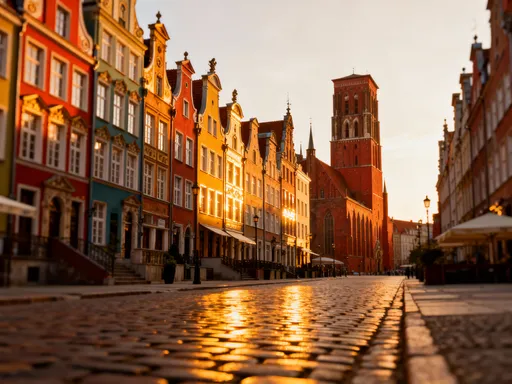
From the moment you step into Gdańsk’s Main Town, the city wraps around you like a living museum. Cobblestone streets wind beneath rows of pastel-colored buildings, their steeply pitched roofs rising like waves above the Motława River. The skyline is a symphony of gables—some stepped, some curved—each one a signature of a different era. Unlike cities where history feels preserved behind glass, Gdańsk’s architecture is part of daily life. Cafés spill onto sidewalks beneath ornate stone portals, and bicycles lean against walls that have stood for over 400 years. The harmony between old and new is seamless, a testament to thoughtful urban planning and deep cultural pride.
The city’s layout follows medieval logic: compact, walkable, and centered around market squares. Long Market (Długi Targ), the heart of the historic district, stretches like a grand corridor lined with meticulously restored townhouses. Each building tells a story through its design—the width of the facade indicating the owner’s wealth, the height signaling social status, and the decorative elements revealing personal tastes and allegiances. What strikes most is the color. Facades glow in soft yellows, warm reds, and delicate blues, creating a visual warmth that contrasts with the solemnity often associated with Northern European cities. This vibrancy is not accidental; it reflects Gdańsk’s centuries-old identity as a Hanseatic trading hub where prosperity funded beauty.
What makes Gdańsk’s architecture so accessible is its human scale. Buildings rarely exceed five or six stories, ensuring that the streets remain intimate and inviting. Even the grandest structures, like the Artus Court or the Neptune Fountain, feel integrated into the urban fabric rather than imposed upon it. This balance allows visitors to experience history not as distant spectacle, but as lived reality. As sunlight glints off copper rooftops and seagulls circle above St. Mary’s Church, one realizes that Gdańsk doesn’t just display its heritage—it breathes it.
Gothic Foundations: Stone, Spire, and Craftsmanship
Beneath the colorful facades and Renaissance flourishes lies a foundation built in brick and ambition—the Gothic era. This was the age when Gdańsk emerged as a major Baltic power, and its architecture reflected both spiritual devotion and civic pride. The most striking example is St. Mary’s Church, a colossal brick basilica that holds the distinction of being the largest brick church in the world. With a capacity for 25,000 worshippers in the 15th century, it was not only a place of worship but a symbol of the city’s economic might and religious significance.
Constructed between 1343 and 1502, St. Mary’s exemplifies the ingenuity of Northern Gothic design. Without access to abundant stone, local builders mastered the use of fired red brick, creating structures of remarkable durability and elegance. The church’s vaulted ceilings soar over 30 meters high, supported by slender pillars and ribbed arches. The walls are punctuated by tall stained-glass windows that flood the interior with colored light, transforming the space into a celestial narrative. The craftsmanship involved in laying millions of bricks with such precision speaks to the skill of medieval masons, many of whom were organized into guilds that passed down techniques through generations.
But St. Mary’s is not alone. Across the city, Gothic influences appear in the Old Arsenal, the city gates, and remnants of the defensive walls. These structures share common features: pointed arches, ribbed vaults, and an emphasis on verticality meant to draw the eye—and the soul—upward. The use of brick allowed for intricate detailing, such as decorative patterns formed by glazed bricks, which add texture without sacrificing structural integrity. What’s remarkable is how these buildings have endured. Despite wars, fires, and centuries of wear, their forms remain intact, a tribute to the foresight and skill of their creators.
The Gothic period also reveals the deep connection between commerce and construction. Wealth from grain, timber, and amber trade funded ambitious building projects. Guilds—associations of merchants and artisans—often financed chapels or sponsored façade decorations to display their influence. This blending of economic power and architectural expression created a cityscape where beauty was not a luxury, but a statement of identity. In Gdańsk, even religion wore the garments of prosperity.
Renaissance Flourish: When Elegance Took Over
If the Gothic era was about reaching toward the heavens, the Renaissance was about celebrating life on earth. From the late 15th century onward, Gdańsk’s elite embraced a new aesthetic—one rooted in symmetry, proportion, and classical inspiration. This transformation was fueled by the city’s continued prosperity and its connections with Italy, the Netherlands, and other cultural centers. Wealthy merchants returned from trade missions with books, artworks, and architectural ideas, eager to imprint their success onto the city’s skyline.
The Golden House (Dom Złota) stands as the crown jewel of this period. Completed in 1618, it was designed not just as a residence but as a manifesto of refinement. Its façade is a tapestry of sandstone carvings—mythological figures, floral motifs, and allegorical scenes that celebrate knowledge, virtue, and the harmony of the cosmos. The building’s three-tiered loggias echo Italian palazzos, yet the use of local materials and adaptation to the narrow urban plot give it a distinctly Gdańsk character. Inside, frescoes and stuccowork reflect the same attention to detail, turning private spaces into galleries of artistic expression.
Other Renaissance townhouses follow similar principles. Courtyards become private oases, hidden behind grand portals, while façades feature rusticated stonework, arched windows, and classical pediments. The emphasis is on balance and order, a reflection of humanist ideals that valued reason and beauty. Even public buildings adopted these elements. The Old Town Hall, expanded during this era, combines Gothic structure with Renaissance ornamentation, symbolizing the city’s evolution.
What makes the Renaissance phase so compelling is its symbolism. Every carved figure, every heraldic crest, tells a story about the values of its time. Mercury, the god of commerce, appears frequently, linking prosperity to divine favor. Images of the four seasons or the liberal arts suggest a worldview that prized education and cultural richness. These were not merely decorative choices—they were declarations of identity. For the merchant class, architecture was a language, and their homes were its most eloquent sentences.
Baroque Whispers: Grandeur in Modest Proportions
Compared to cities like Vienna or Prague, Gdańsk’s Baroque presence is subtle, almost understated. Yet, its influence is undeniable, appearing in curves, contrasts, and quiet opulence. The Baroque era arrived later in the city, primarily in the 17th and early 18th centuries, often tied to religious renewal and the influence of Catholic institutions after the Reformation. While Protestantism had limited the use of elaborate church decoration, the return of Catholic presence brought a wave of artistic revival, particularly in monasteries, chapels, and private residences.
One of the finest examples is the Church of St. Catherine, where the interior unfolds in a cascade of gilded stucco, sculpted angels, and dramatic altarpieces. The contrast between the modest brick exterior and the sumptuous interior is intentional—a reflection of Baroque theology that emphasized the divine breaking into the everyday. Curved gables, another hallmark of the style, appear on several townhouses along Mariacka Street, where they soften the skyline with fluid lines and sculptural flourishes. These gables often feature volutes, scrolls, and central ornaments that draw the eye upward, creating a sense of movement and drama.
What sets Gdańsk’s Baroque apart is its restraint. Unlike the overwhelming grandeur seen in royal capitals, the city’s interpretation of the style respects its urban context. Buildings do not dominate; they enhance. Even in religious spaces, the ornamentation feels intimate rather than overwhelming. This modesty may stem from the city’s mercantile culture, where ostentation was tempered by practicality. Yet, within that restraint lies a deep appreciation for craftsmanship. Woodcarvers, stucco artists, and painters worked in harmony to create spaces that inspire awe without alienating the viewer.
The Baroque period also saw the rise of private devotion. Wealthy families commissioned side chapels or prayer rooms within their homes, decorated with religious scenes and family crests. These spaces blended personal piety with social status, reinforcing the idea that faith and identity were intertwined. Today, these details survive in restored interiors, offering glimpses into a world where spirituality was both public and profoundly personal.
Rebuilding Identity: Architecture After Destruction
No discussion of Gdańsk’s architecture is complete without confronting the devastation of World War II. By 1945, over 90% of the historic center lay in ruins. Centuries of layered history—Gothic, Renaissance, Baroque—had been reduced to rubble. Yet, in the decades that followed, Gdańsk undertook one of Europe’s most ambitious reconstruction efforts. Rather than modernize or erase the past, the city chose to rebuild with fidelity, determination, and reverence.
The reconstruction of the Old Town was guided by a simple but powerful principle: authenticity. Using pre-war photographs, architectural plans, and historical records, craftsmen and historians worked together to restore buildings as they had existed. Original techniques were revived—bricklaying, stonework, wood carving—ensuring that the new structures were not replicas, but continuations. The Artus Court, once a grand meeting place for merchants and nobility, was painstakingly rebuilt using salvaged materials and traditional methods. The Neptune Fountain, destroyed during the war, was recast from surviving molds, returning a symbol of civic pride to the heart of the city.
This effort was not merely about aesthetics. It was an act of cultural reclamation. In rebuilding, Gdańsk asserted its identity, refusing to let destruction define its future. The process also involved the community—residents returned to homes restored with care, and public spaces were reimagined as places of gathering and memory. Schools, museums, and archives played a vital role, ensuring that the knowledge behind historic construction was preserved and passed on.
The result is a city that feels both ancient and renewed. Visitors walking through Long Market today see buildings that are, in many cases, postwar reconstructions. Yet, because of the attention to detail and respect for original design, the experience is indistinguishable from what it would have been centuries ago. This is not deception—it is dedication. Gdańsk’s rebuilt architecture stands as a testament to resilience, showing that even when history is shattered, it can be reassembled with care and conviction.
Hidden Layers: Lesser-Known Structures and Urban Details
Beyond the grand churches and famous townhouses lies a quieter, equally captivating layer of architecture—the details that invite closer inspection. These are the elements that reward slow walking and curious eyes: a carved relief of a mermaid on a cellar door, a wooden staircase clinging to the side of a granary, or a narrow canal where old merchant boats once docked. These features may not dominate guidebooks, but they give Gdańsk its soul.
Along the Motława River, the granaries stand as silent witnesses to the city’s trading past. Built in the 14th to 17th centuries, these long, narrow structures stored grain before export. Their massive timber frames and thick brick walls speak to the scale of Baltic commerce. Today, some have been repurposed as museums, galleries, or restaurants, their interiors transformed while their exteriors remain true to form. This adaptive reuse honors history without freezing it in time.
Equally fascinating are the merchant cellars beneath the streets. Accessed through heavy wooden doors, these underground chambers once held wine, spices, and salt. Their vaulted brick ceilings and cool, dim lighting create an atmosphere of mystery. Now, some serve as wine bars or event spaces, allowing modern life to unfold within ancient walls. The contrast is poetic—laughter echoing where silence once reigned.
Street-level reliefs are another delight. Found on corners, gates, and building bases, they depict everything from coats of arms to allegorical figures. Some are whimsical; others are solemn. Each tells a fragment of the city’s story. Even the manhole covers bear the Gdańsk coat of arms, a small but proud reminder of civic identity. These details, though easily overlooked, are essential to the city’s charm. They prove that beauty in architecture is not only in scale, but in the care taken in every detail.
Gdańsk Today: Tradition Meets Tomorrow
Gdańsk’s architectural journey is not confined to the past. Today, the city continues to grow, but with a deep respect for its heritage. New developments—residential buildings, cultural centers, and public spaces—are designed to harmonize with the historic fabric. Architects often incorporate traditional elements: brick cladding, gabled roofs, and arched windows—reinterpreted with modern materials and sustainability in mind. The goal is not imitation, but dialogue between eras.
One notable example is the Museum of the Second World War, located just outside the Old Town. Its design—a long, horizontal structure that emerges from the landscape—avoids competing with historic buildings while making a powerful statement. The use of raw concrete and glass contrasts with brick and stone, yet the building’s scale and orientation ensure it complements rather than overwhelms. Inside, natural light flows through skylights, creating a contemplative atmosphere suited to its subject.
Urban planning in Gdańsk prioritizes walkability, green spaces, and preservation. Historic districts are protected, and renovation projects follow strict guidelines to maintain authenticity. At the same time, the city invests in infrastructure—modern trams, bike lanes, and energy-efficient retrofits—that support a high quality of life. This balance ensures that Gdańsk remains not just a museum, but a living city.
For visitors, especially women in their 30s to 50s who value culture, history, and meaningful travel, Gdańsk offers something rare: a place where the past is not just remembered, but lived. It’s a city where you can sip coffee in a café that was once a merchant’s warehouse, or watch children play in a square that has hosted markets for centuries. The architecture tells stories of resilience, creativity, and community—values that resonate deeply in today’s world.
Walking through Gdańsk is more than sightseeing; it’s an invitation to reflect on how places shape identity. The bricks, the colors, the quiet courtyards—they all speak of a people who rebuilt not just buildings, but hope. In a time when so much feels transient, Gdańsk stands as a reminder that beauty, when rooted in truth and care, can endure. Its architecture is not frozen in time—it lives, breathes, and inspires. And perhaps, in its quiet strength, it offers a lesson for us all: that honoring the past is not about clinging to what was, but about building what can be, with wisdom, grace, and heart.