You Won't Believe What Chad's Capital Hides Beyond the Dust
N’Djamena, Chad—often overlooked and misunderstood—is more than just a gateway to the Sahara. Beyond its dusty streets lies a landscape of quiet majesty: golden dunes meeting the horizon, the shimmering Chari River at sunset, and skies so vast they swallow the day. I came expecting little, but what I found was raw, untouched beauty few ever witness. This isn’t just travel—it’s revelation. In a world where popular destinations are crowded and overexposed, Chad’s capital offers something rare: authenticity, stillness, and the chance to experience nature in its most unfiltered form. Here, adventure isn’t loud or flashy—it’s found in the soft glow of dawn over the Sahel, the ripple of water beneath a fisherman’s net, and the whisper of wind shaping sand into silent sculptures.
First Impressions: Arriving in N’Djamena – The City That Defies Expectations
For many travelers, the name “N’Djamena” evokes images of heat, dust, and hardship. Media portrayals often emphasize political instability or environmental challenges, painting an incomplete picture of a city that pulses with quiet resilience. Yet upon arrival, the reality is far more nuanced. The capital of Chad greets visitors not with chaos, but with a calm rhythm shaped by the sun’s arc and the flow of the Chari River. As the plane descends, one sees a patchwork of red earth, sparse greenery, and clusters of low buildings hugging the riverbanks. The air is dry, yes, but filled with the scent of woodsmoke and baking bread from roadside ovens.
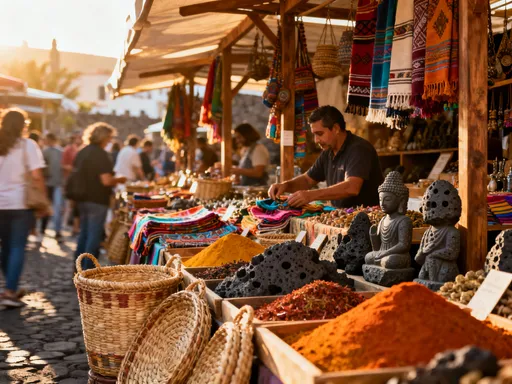
Stepping into the city, the first impression is one of contrast. On one side, there’s the hustle of daily life: motorbikes weaving through traffic, markets brimming with okra, millet, and bright textiles, and children in crisp school uniforms walking in pairs. On the other, there’s an almost meditative stillness in the open spaces between neighborhoods, where baobab trees stand like sentinels and the horizon seems to stretch infinitely. Unlike sprawling metropolises, N’Djamena doesn’t overwhelm. It invites slow observation. Within minutes of leaving the central district, the noise fades, and the landscape opens into wide, sun-drenched plains where goats graze and women balance clay pots on their heads.
What surprises most is how quickly the city dissolves into nature. A short drive in any direction brings you to the edge of the Sahel, where urban life gives way to open savannah and scrubland. This transition is not jarring but seamless, a reminder that N’Djamena is not imposed on the land but woven into it. The city doesn’t dominate the environment; it coexists. For travelers, this means that immersion in Chad’s natural beauty begins not after a long journey, but almost immediately. There is no need to “escape” the capital to find peace—it’s already here, embedded in the rhythm of everyday life and the vast skies above.
The Chari River: Lifeblood of the Capital
If N’Djamena has a heartbeat, it is the Chari River. Flowing from the Central African Republic and joining the Logone River just north of the city, this waterway is the reason the capital exists where it does. For centuries, communities have settled along its banks, drawn by the promise of water in an increasingly arid region. Today, the river remains the lifeblood of the city, supporting agriculture, transportation, and daily domestic routines. Its presence transforms what could be a barren outpost into a place of sustenance and serenity.
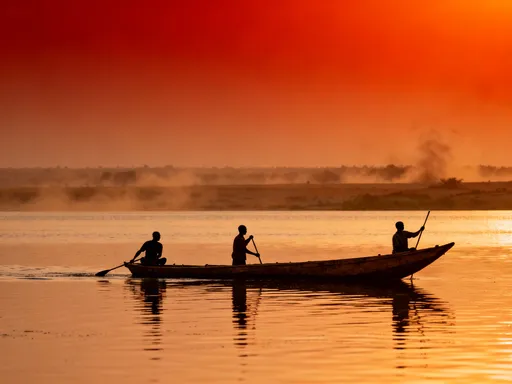
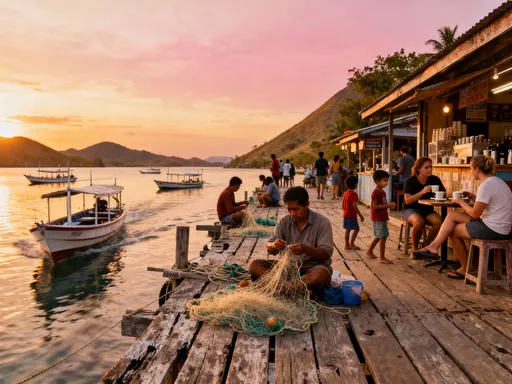
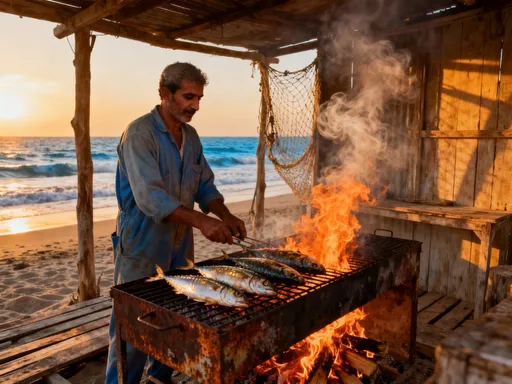
Morning along the Chari is a symphony of quiet activity. As the sun rises, casting a soft gold over the water, fishermen push their narrow wooden pirogues into the current, casting nets with practiced ease. Nearby, women squat at the water’s edge, scrubbing clothes on flat stones, their voices rising in gentle conversation. Children, barefoot and laughing, wade in the shallows, chasing small fish or simply cooling off before school. The river is not just a resource; it is a communal space, a stage for the daily rituals that bind people to one another and to the land.
By late afternoon, the mood shifts. The heat begins to wane, and families gather along the banks to watch the sunset. The water catches fire in hues of orange and crimson, reflecting the sky like a mirror. This is a moment of stillness, of collective pause. Even in a city with limited tourism infrastructure, visitors are welcomed with quiet curiosity. A man might offer a nod, a child wave shyly from a distance. There are no grand viewing platforms or cafes, only the raw beauty of light on water and the soft lap of waves against the shore.
For photographers and contemplative travelers, the best vantage points are found just outside the central districts, where the river widens and the surroundings remain largely untouched. Early morning offers the clearest light and the most authentic scenes of daily life, while dusk provides a more introspective experience. The Chari does not dazzle with spectacle; it reveals itself slowly, through repetition and presence. To spend time by its banks is to understand how a single natural feature can shape not only survival but also culture, community, and quiet joy.
Into the Sahel: Where Savannah Meets Desert
Just beyond the outskirts of N’Djamena lies one of the most ecologically significant zones in West Africa: the Sahel. This transitional belt, where the grasslands of the savannah gradually give way to the sands of the Sahara, is a landscape of subtle beauty. It is not the dramatic contrast of jungle and desert, but a slow, poetic shift in tone and texture. Acacia trees dot the horizon, their flat crowns casting long shadows. Red soil stretches endlessly, cracked in places by drought, yet resilient enough to support hardy grasses and shrubs. This is a region shaped by extremes—of heat, of rainfall, of survival.
What makes the Sahel remarkable is its quiet biodiversity. At first glance, it may appear barren, but closer observation reveals life in motion. Monitor lizards dart between rocks, their scales glinting in the sun. Flocks of migratory birds, including white storks and Abdim’s storks, pass through during seasonal transitions, resting in isolated wetlands. Small antelope like the dorcas gazelle move cautiously through the brush, while raptors circle high above, scanning for movement. Even the plants tell a story of adaptation: the doum palm stores water in its trunk, and the gum arabic tree exudes a resin once prized in global trade.
For nature lovers, short excursions into the Sahel offer a chance to witness this delicate balance firsthand. Guided drives along unpaved tracks reveal the changing textures of the land, from dense thickets to open dunes. Local guides, often from nearby villages, share knowledge passed down through generations—which plants are edible, where to find water after a dry spell, how to read animal tracks. These tours are not about ticking off sightings but about deepening understanding. The Sahel teaches patience, observation, and respect for resilience.
One of the most moving experiences is simply sitting in silence as the sun sets. With no artificial light for miles, the stars emerge in astonishing clarity. The Milky Way arcs overhead, and the air cools rapidly, carrying the faint scent of dry grass. In this vastness, one feels both small and connected. The Sahel does not shout its beauty; it whispers it. And for those willing to listen, it offers a rare sense of peace, a reminder that not all wonders are loud or crowded.
Sunset at the Dunes: A Hidden Spectacle Near the City
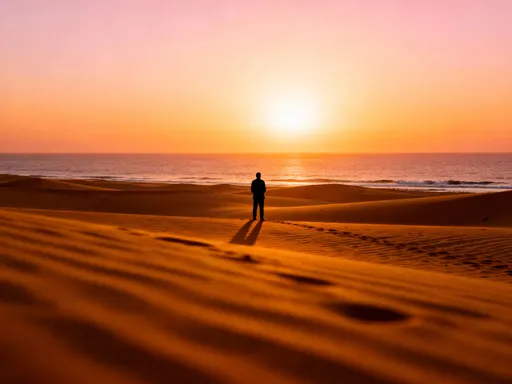
Only a short distance from N’Djamena, where the Sahel begins to surrender to the Sahara, lie undulating dunes that few travelers know about. These are not the towering ergs of the deep desert but gentle, wind-sculpted formations that rise like waves frozen in time. They are accessible, yet rarely visited, making them one of Chad’s best-kept secrets. And when the sun begins its descent, the scene transforms into something almost sacred.
Golden hour here is unlike anywhere else. As the light slants across the sand, the dunes shift in color from pale beige to deep amber, then to a rich copper. Shadows lengthen, creating patterns that look like brushstrokes on a canvas. The air grows still, and the only sound is the soft crunch of footsteps and the occasional call of a distant bird. It is a moment of pure visual poetry, one that feels both intimate and infinite.
Reaching these dunes requires a local guide, not only for navigation but for safety and cultural respect. The terrain is fragile, and the sun can be unforgiving. Responsible tour operators, often affiliated with community-based initiatives, ensure that visits are low-impact and educational. They explain how the dunes shift with the wind, how nomadic herders use the area seasonally, and why preserving these spaces matters in the face of desertification.
What makes this experience truly special is the absence of crowds. There are no souvenir stalls, no loudspeakers, no queues. Just the desert, the sky, and the quiet awe of being present. Compared to more famous desert destinations like Morocco’s Merzouga or Namibia’s Sossusvlei, these dunes offer a purer, more personal encounter with nature. They remind us that wonder doesn’t require spectacle—only attention. For photographers, the lighting is ideal; for meditative travelers, it is a sanctuary. And for all, it is proof that beauty often lies just beyond the well-trodden path.
Wildlife Beyond the City: Zakouma National Park as a Natural Extension
While N’Djamena offers glimpses of nature’s quiet strength, a journey southeast reveals one of Africa’s most inspiring conservation stories: Zakouma National Park. Serving as a natural extension of the capital’s ecological narrative, Zakouma is a testament to resilience, both of wildlife and of human commitment. Once ravaged by poaching, the park has undergone a remarkable recovery, thanks to sustained protection efforts and community involvement. Today, it is home to thriving populations of elephants, lions, kordofan giraffes, and countless bird species.
The transformation is nothing short of emotional. Visitors who arrive after witnessing the austerity of the capital are often unprepared for the abundance they find. Elephant herds move in tight family groups, their calves protected in the center. Lions rest in the shade of acacia trees, their coats blending with the golden grass. The kordofan giraffe, a subspecies adapted to arid conditions, strides gracefully across open plains, its ossicones catching the light. Seasonal migrations bring even more life: tens of thousands of antelope, including the white-eared kob, move through the park in search of water and fresh grazing.
Reaching Zakouma requires planning. Most travelers fly from N’Djamena to a small airstrip near the park, followed by a transfer in a 4x4 vehicle. The journey itself is part of the experience, offering views of changing landscapes and remote villages. Tour operators with conservation credentials provide guided safaris that prioritize minimal disturbance. Game drives are conducted at dawn and dusk, when animals are most active, and rangers share insights into tracking, behavior, and conservation challenges.
The emotional impact of Zakouma cannot be overstated. After years of decline, seeing elephants walk freely, hearing lion cubs call to their mothers, and watching flocks of pelicans land on a lake is profoundly moving. It is a reminder that recovery is possible, even in the face of great loss. For travelers, Zakouma is not just a destination but a lesson in hope. It shows that when people commit to protecting nature, nature responds. And in doing so, it restores not only ecosystems but also the human spirit.
The Rhythm of Nature: How Landscape Shapes Local Life
In Chad, the environment is not a backdrop to life—it is the foundation. Every aspect of daily existence, from food to shelter to tradition, is shaped by the rhythms of the land. Along the Chari River, seasonal flooding determines when crops are planted. Families cultivate sorghum, millet, and vegetables in the nutrient-rich silt left behind, following cycles that have remained unchanged for generations. In the dry season, they rely on stored grains and river fish, adapting to scarcity with ingenuity and patience.
Natural resources are used with deep respect. Date palms provide fruit, shade, and materials for weaving. Clay from riverbanks is molded into pots and bricks, fired in open ovens. Even the wind is harnessed, not through technology but through architectural design—houses are built to catch breezes and stay cool. These practices are not primitive; they are sophisticated adaptations to a challenging climate, refined over centuries.
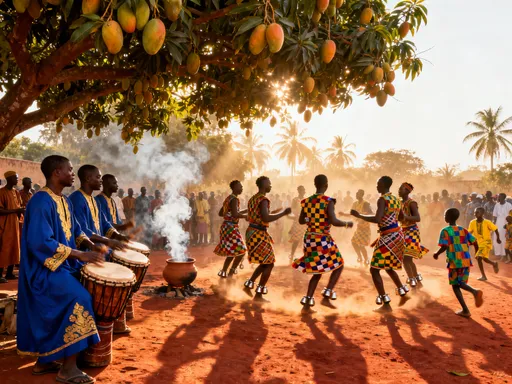
Cultural resilience is evident in festivals, storytelling, and craftsmanship. Women embroider textiles with patterns that echo the landscape: waves for the river, dots for rain, zigzags for dunes. Elders pass down knowledge of medicinal plants, weather signs, and navigation by stars. These traditions are not relics but living systems of understanding, deeply tied to the health of the environment.
For visitors, the lesson is clear: to appreciate Chad is to observe without intrusion. This means asking permission before photographing people, respecting sacred sites, and supporting local artisans rather than buying imported goods. It means listening more than speaking, learning rather than assuming. The beauty of N’Djamena and its surroundings is not just in what one sees, but in how one connects. When travelers move with humility, they are often met with generosity—a shared meal, an invitation to a courtyard, a story told under the stars. These moments, fleeting yet profound, are the true essence of travel.
Traveling Responsibly: Preserving N’Djamena’s Fragile Beauty
The landscapes around N’Djamena are breathtaking, but they are also fragile. Desertification is advancing, pushing the Sahara further south each year. Water scarcity affects both people and wildlife, and waste management remains a challenge in areas with limited infrastructure. Climate change amplifies these pressures, making conservation not just an ideal but a necessity. For travelers, this means that every choice carries weight. Tourism, when done responsibly, can support protection efforts; when done carelessly, it can contribute to harm.
Minimizing impact starts with simple actions. Using reusable water bottles reduces plastic waste. Staying on marked paths prevents soil erosion. Avoiding loud noises and sudden movements protects wildlife and respects local peace. Choosing eco-conscious guides and community-based tours ensures that tourism benefits residents directly. Some initiatives train former hunters as rangers, turn village compounds into guesthouses, and fund schools through visitor fees. Supporting these programs means investing in sustainable futures.
Cultural awareness is equally important. Chad is a predominantly Muslim country with conservative values. Dressing modestly, especially outside the capital, shows respect. Greeting people in Arabic or Chadian Arabic, even with simple phrases like “Salam aleikum” or “Na Goda?” (How are you?), builds connection. Patience is essential—things move slowly, plans change, and schedules are fluid. This is not inefficiency but a different relationship with time, one that values presence over pace.
Ultimately, responsible travel is about mindset. It is about seeing oneself not as a consumer of experiences but as a guest in someone else’s world. It is about leaving places better than we found them, not just physically but relationally. In N’Djamena, where beauty is quiet and resilience is everyday, the most powerful act a traveler can make is to witness with gratitude and act with care.
Conclusion: Redefining Adventure in an Unlikely Place
N’Djamena challenges our assumptions about what an adventure should be. It does not offer luxury resorts, Instagrammable landmarks, or adrenaline-fueled activities. Instead, it offers depth: the depth of a river reflecting the sky, the depth of silence in the desert, the depth of a culture that has learned to thrive in balance with nature. It reminds us that the most profound journeys are often the quietest, the ones that unfold not in grand gestures but in small, sacred moments.
In a world that glorifies the familiar, Chad’s capital stands as a counterpoint. It is a place of simplicity, of resilience, of understated beauty. To visit is not to conquer or collect, but to witness and understand. It is to redefine adventure not as escape, but as connection. The dunes, the river, the Sahel, the wildlife—all speak of a world that exists on its own terms, untouched by the noise of mass tourism.
For those willing to look beyond the dust, N’Djamena offers a rare gift: the chance to see clearly. To see the sky without light pollution. To see people living with dignity and grace. To see nature not as a resource to exploit, but as a rhythm to honor. This is not a destination for everyone. But for those who come with curiosity, respect, and open eyes, it may become one of the most unforgettable places they ever visit. Sometimes, the most profound journeys are the ones no one told you to take.